Services

Custom software development for Indian businesses

We write the screens, the data and what is out of scope on paper first, then build against that document. Web applications, Android and cross-platform apps, ERP and GST billing, AI inside software you already run, and taking over code somebody else left behind.

What we build

Six kinds of work. Most projects are one of them with a piece of another attached — an ERP with a field app, or a custom portal with document extraction behind it.

Custom software development

Web applications built around how your business actually works, rather than around a template. We take the problem, agree the shape of the solution on paper, then build it.

  • Internal tools and dashboards
  • Customer portals
  • Workflow and approval systems
  • Third-party and payment integrations

ERP & GST billing systems

We run our own ERP product, so we know where billing software breaks. GST compliance, stock across locations, and migration off Tally, BUSY or spreadsheets.

  • GST billing, e-invoice and e-way bill
  • Multi-location inventory
  • Tally and BUSY data migration
  • Reports your accountant will accept

Mobile app development

Android and cross-platform apps for teams that work away from a desk — field sales, collections, deliveries and stock counts, built to keep working when the network does not.

  • Offline-first field apps
  • Order booking and collection apps
  • Play Store release and updates
  • Push notifications and device sync

AI & LLM integration

Practical AI inside software you already use: document extraction, data import, search over your own records, and assistants that answer from your data instead of guessing.

  • Document and invoice extraction
  • Retrieval over your own data
  • Classification and data clean-up
  • Model evaluation before you commit

MVP & product engineering

For founders who need something real in front of users. A scoped first version, shipped in weeks, built so the second version does not need a rewrite.

  • Scoping and estimation
  • Design and build
  • Deployment and monitoring
  • Iteration after real user feedback

Maintenance & modernisation

Taking over software somebody else wrote, getting it stable, and moving it forward — upgrades, performance work and the tests that should have been there.

  • Legacy upgrades
  • Performance and cost tuning
  • Security fixes
  • Handover documentation

How we work

Four steps, and you see the thing working at step three

The same order on every project, whether it is a two-week fix or a first release.

  1. Scoping call

    We ask what breaks today, who uses it and what the data looks like. No proposal yet.

  2. Written scope and quote

    Screens, data and exclusions in a document you read before the number is attached to it.

  3. Two-week slices

    A staging link from the first slice, so progress is something you open rather than something you are told.

  4. Handover

    Repository, credentials and run documentation. You own the code; we stay on if you want us to.

Stack

What we actually write, and why it is a short list

We keep to tools we have run in production and can still support in three years, rather than adding a framework per project.

On the front end we build with React and Next.js, and with Vue where a page needs to stay server-rendered and light. TypeScript is the default on anything larger than a form, because the compiler catches the class of bug that otherwise reaches a user.

Server side we work in Laravel and Node, and in Django or FastAPI when the work is Python-heavy — data processing, imports, anything sitting next to a model. We run our own products on this stack, so the trade-offs are ones we live with rather than ones we read about.

Data goes in PostgreSQL or MySQL, with MongoDB where documents genuinely fit better than rows, and Redis for queues, sessions and caching. Everything ships in Docker, so the server your software runs on is described in your repository instead of in somebody's memory.

For AI work we use the OpenAI and Claude APIs, orchestrate with LangChain, and put your own records behind a vector database so answers are retrieved from your data rather than generated around it. We evaluate on your documents before you commit to a model, because accuracy on a sample invoice tells you nothing about accuracy on a thousand.
  • React
  • Next.js
  • Vue
  • TypeScript
  • Node
  • Laravel
  • Django
  • FastAPI
  • Python
  • PostgreSQL
  • MySQL
  • MongoDB
  • Redis
  • Docker
  • OpenAI
  • Claude
  • LangChain
  • Vector search

Questions

Cost, timeline and who owns the code

The three things every enquiry asks, answered before you have to ask them.

What does a custom software project cost?

Custom work is quoted per project after a scoping conversation. We write down the screens, the data and what is out of scope first, then quote against that document, so the number you see is attached to something you have already read. We do not publish a day rate or a starting price for custom work because the honest answer depends on the scope.

How long does the first release take?

A scoped first version typically takes six to ten weeks. We build in two-week slices with a staging link you can open from the first slice, so you see progress through the project rather than at the end of it.

Who owns the code you write?

You do. The client owns the code, the database and the deployment at the end of the project, and we hand over the repository, the credentials and the documentation needed to run it without us.

Do you work with clients outside Uttarakhand?

Yes. Our office is in Kankhal, Haridwar, and we work remotely with clients across India and abroad. Calls, shared staging links and written scope documents do most of the work; we visit in person when a project needs it and the location allows.

Can you take over software somebody else built?

Yes. Taking over an existing codebase is a regular part of our work: we read it, get it stable and tested, then extend it. We also migrate businesses off Tally, BUSY or spreadsheets onto software that fits how they actually work.

should I buy ready-made software or get something custom built?

Buy ready-made when your process is a common one: a product someone else already maintains costs less than anything built for you. Choose custom work when the process is the business itself, when no product fits without being bent out of shape, or when the software must sit around systems you already run. Comprog Technology does both. Custom projects are quoted per project after scoping, a scoped first version typically takes six to ten weeks, and the client owns the code, the database and the deployment.

Work

Software we built for somebody else

Our own products show what we ship for ourselves. This is one we built and still run for a client.

Hospitality, Ubud, Bali

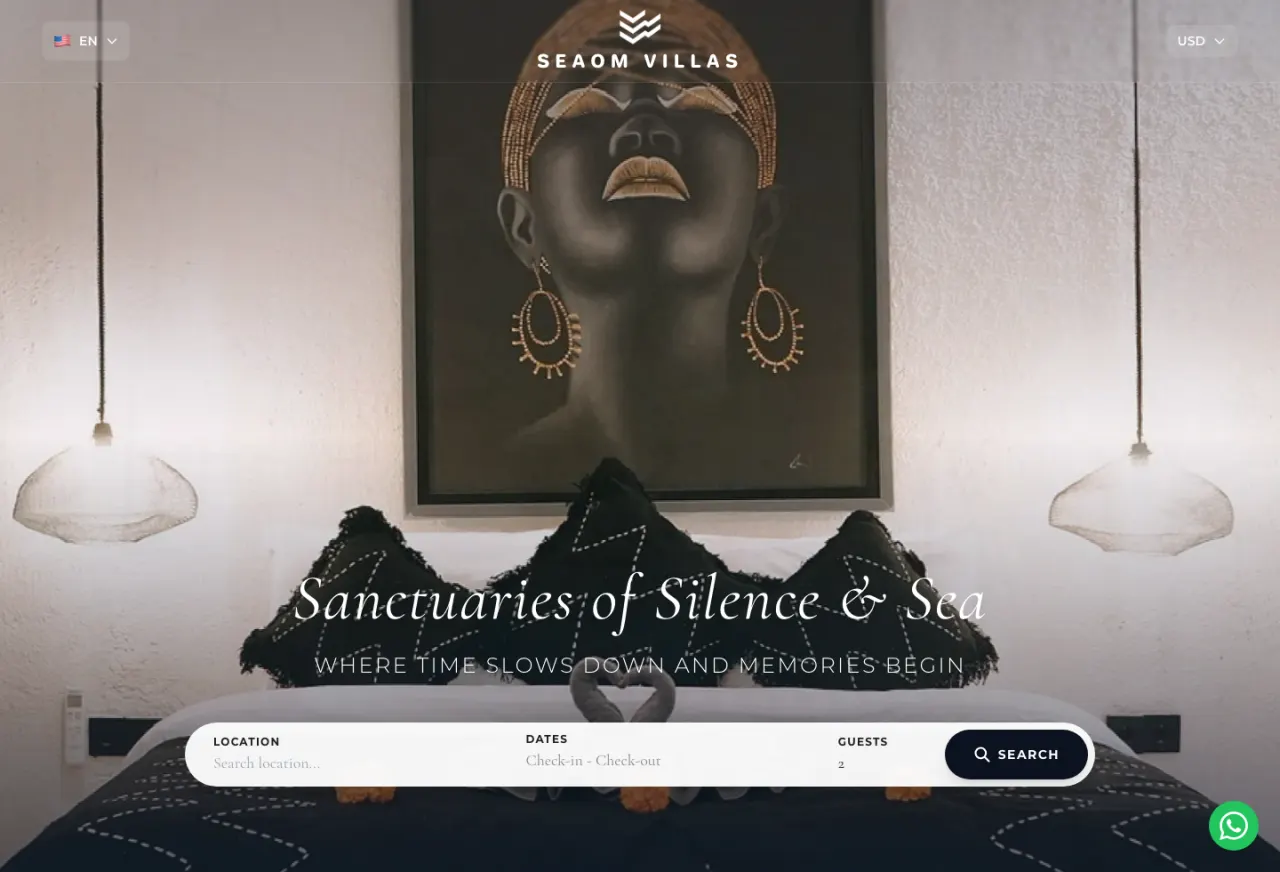
Seaom Villas

A direct booking platform for a villa operator in Bali. Guests browse and book in their own language and currency and pay by card, and the owner runs rates, availability and content themselves rather than through an agency.

Built and maintained end to end by Comprog Technology.

seaomvillas.com
Seaom Villas home page on a desktop browser, with the villa search bar for location, dates and guests over the hero image

Tell us what breaks today